(+234) 813 635 0953
(+234) 708 354 1287
Plot 1849,
Moh'd Mahathir St.
Asokoro Ext. - Abuja.
08:00 - 15:00
Monday to Friday
At Africa Community School, our Early Years Programme provides a nurturing and stimulating environment where young children begin their educational journey with confidence, curiosity, and joy. We recognize that the early years are a critical period in a child’s development, and our programme is carefully designed to build a strong foundation for lifelong learning.
Our Early Years curriculum combines elements from Nigerian, British, and Montessori educational frameworks, creating a balanced and holistic approach to early childhood education. Through play-based learning, guided exploration, and structured activities, we support children in developing academically, socially, emotionally, physically, and spiritually.
Our goal is to help each child grow at their own pace while fostering independence, creativity, and a love for learning.
Our programme is structured to meet the developmental needs of children at different stages of early childhood.
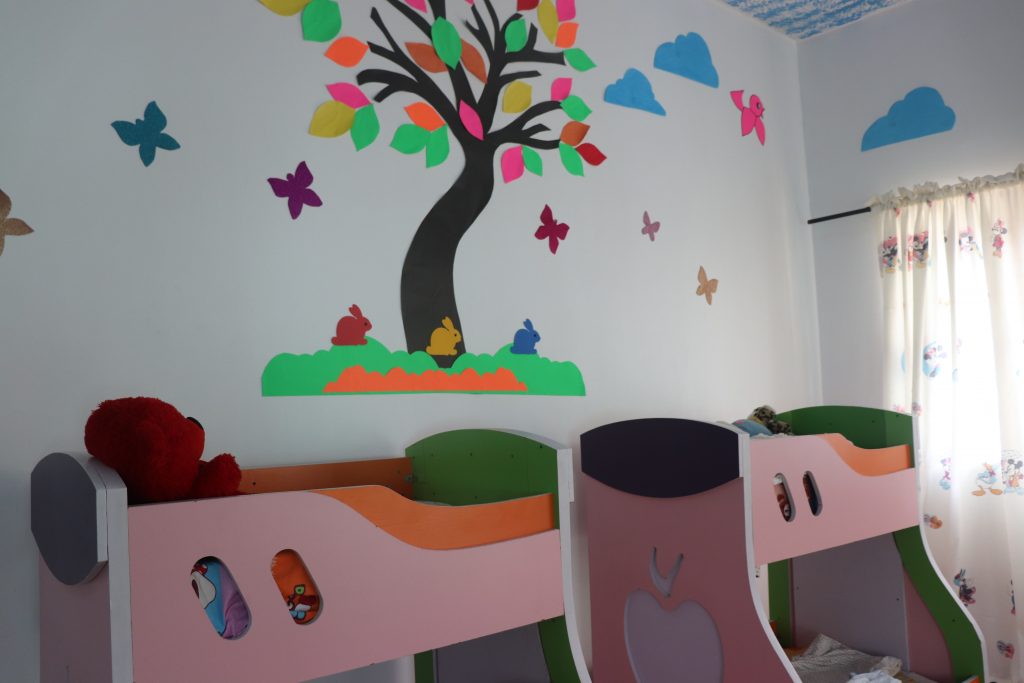
Our Creche provides a safe, warm, and nurturing environment where infants receive attentive care and gentle stimulation appropriate for their stage of development.
At this stage, we focus on:
Our caregivers ensure that each child receives individualized attention that supports early growth and wellbeing.
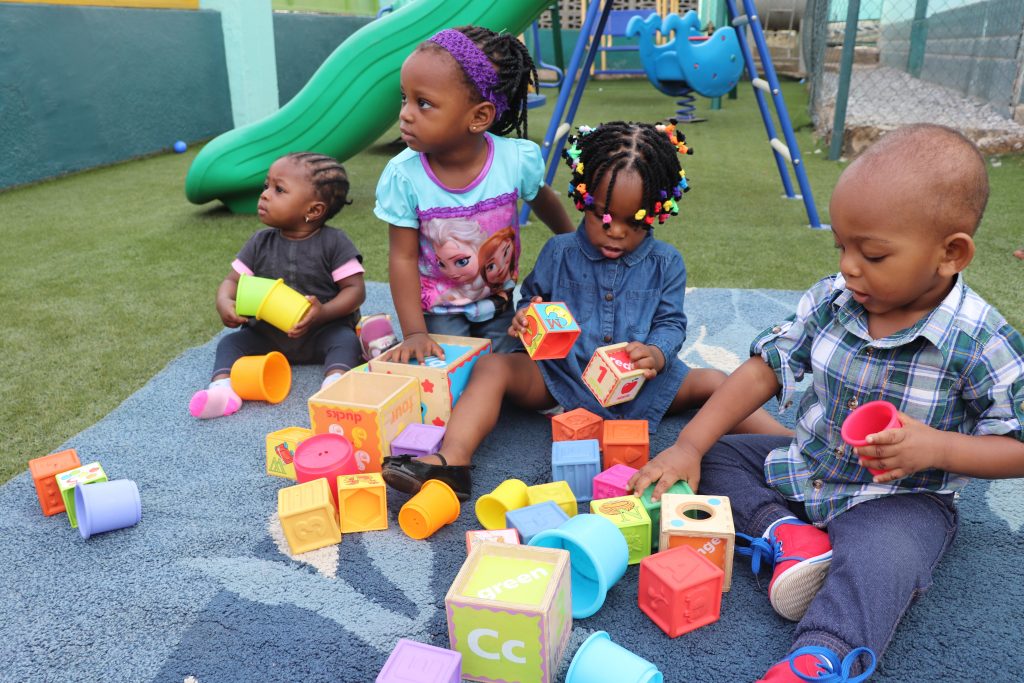
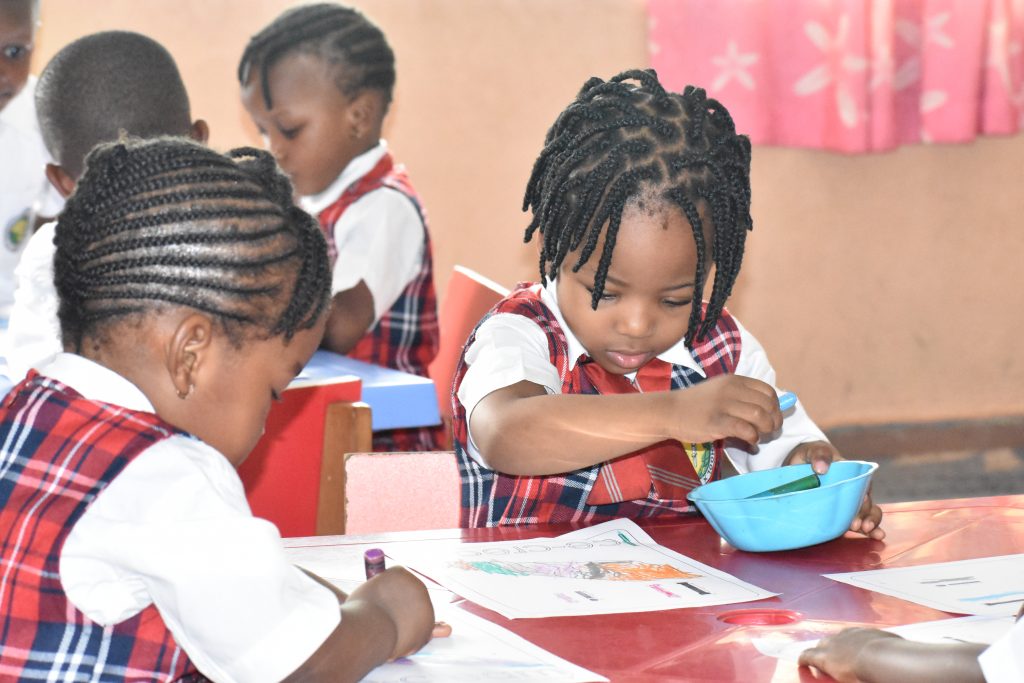
The Pre-School stage introduces toddlers to a playful and structured learning environment. Children begin to develop early communication, social interaction, and independence.
Key focus areas include:
Children are encouraged to explore their surroundings while building confidence in social settings.
At Pre-KG level, children begin to experience a balance between structured learning and free exploration. Activities are designed to encourage curiosity and build foundational skills.
Learning at this stage focuses on:
Children are guided to develop independence while strengthening their ability to interact with others.
Lower KG introduces foundational academic concepts in a stimulating, play-based learning environment. Children begin to engage more actively in structured learning while still benefiting from creative exploration.
Key learning areas include:
This stage prepares children for more structured learning while maintaining the creativity and curiosity that define early childhood education.
Upper KG serves as the bridge between Early Years and Primary School. Students continue to learn in a supportive environment while gradually transitioning to more structured academic learning.
In Upper KG, students engage in:
This stage prepares children academically, socially, and emotionally for a successful transition into primary education.
Our Early Years curriculum focuses on key developmental areas that support well-rounded growth.
Children develop early reading and communication skills through phonics, storytelling, vocabulary building, and interactive discussions. These activities nurture a love for language and form the foundation for reading and writing.
Through games, puzzles, and hands-on activities, children learn about numbers, shapes, patterns, and simple problem-solving. Numeracy activities help children develop logical thinking and early mathematical understanding.
Physical activities help children develop coordination, balance, and strength. Through play, dance, outdoor activities, and fine motor tasks such as drawing and building, children strengthen both gross and fine motor skills.
Children learn to express emotions, cooperate with others, and build positive relationships. This area focuses on confidence building, empathy, independence, and social responsibility.
Children explore the environment around them through hands-on activities that introduce basic science, nature exploration, and cultural awareness. This encourages curiosity and appreciation for the world around them.
Through art, music, drama, and imaginative play, children develop creativity and confidence in expressing themselves.
Practical life exercises help children develop independence and responsibility. Activities such as tidying up, organizing materials, and practicing self-care routines build confidence and life skills from an early age.
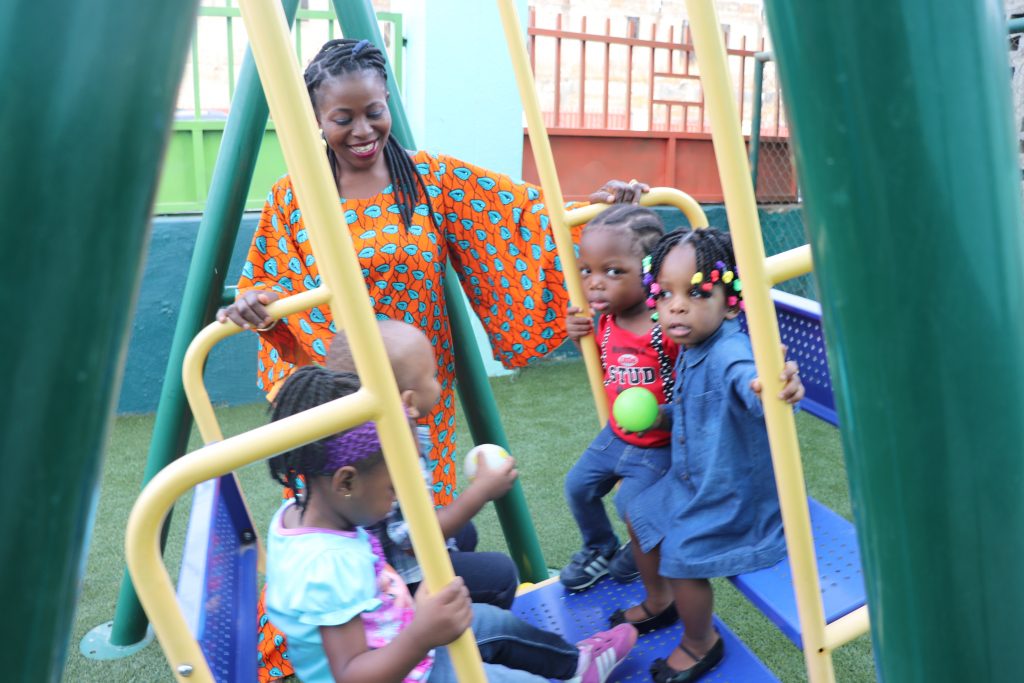
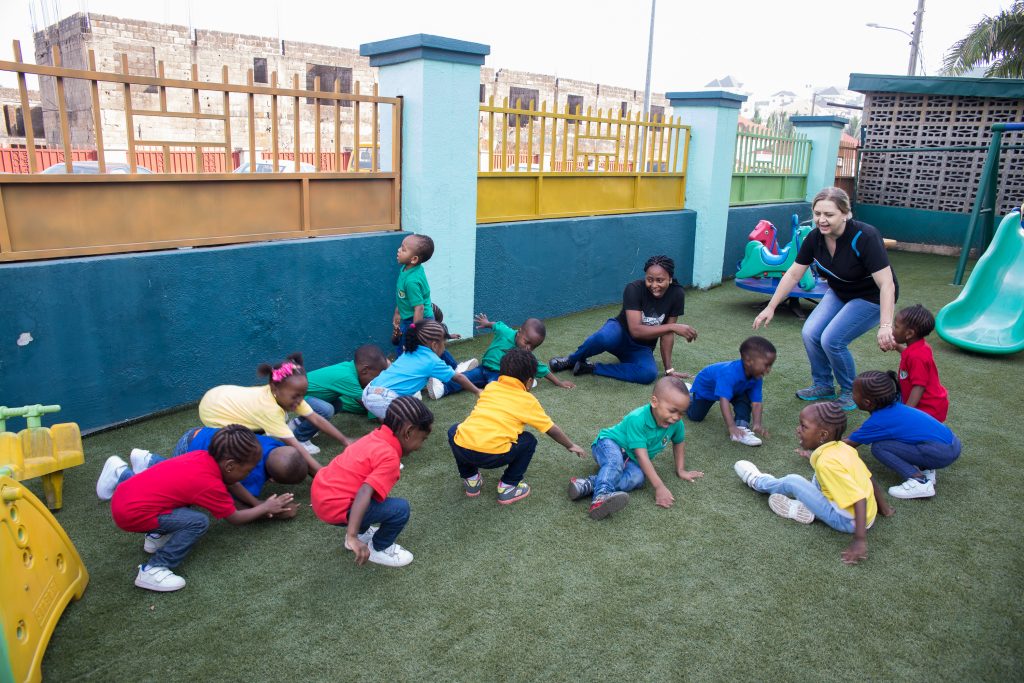
Play is central to learning in the early years. Our classrooms and outdoor spaces are designed to encourage exploration, creativity, and physical activity.
Outdoor learning opportunities allow children to:
These experiences contribute to children’s overall physical health and emotional wellbeing.
Character formation begins early in our programme. Through daily interactions, storytelling, and guided discussions, children are taught important values such as kindness, respect, responsibility, and empathy.
Spiritual development is also integrated through Bible stories, songs, and participation in the Good News Club. These activities help children develop moral awareness and a sense of community.
Assessment in the Early Years is focused on observing each child’s development rather than assigning grades. Teachers monitor progress through continuous observation during classroom activities and play.
Mid-term and end-of-term evaluations help track development in areas such as literacy, numeracy, social skills, and motor development. Parents receive detailed reports highlighting their child’s strengths, achievements, and areas for further growth.
We recognize that every child develops at their own pace. Our Learning Support Programmes provide additional assistance for children who may need extra guidance.
Through small group instruction and individualized attention, our teachers ensure that every child receives the support necessary to succeed and build confidence.
We value strong partnerships with parents and believe that collaboration between home and school plays an important role in a child’s development.
Communication is maintained through:
These channels allow parents to stay actively involved in their child’s learning journey.
Our Early Years Programme lays a strong academic, social, emotional, and spiritual foundation that prepares children for the transition into primary school. By nurturing each child’s unique, God-given potential, we aim to create confident learners who are curious, compassionate, and ready to embrace future challenges.
Africa Community School (ACS) has been self-supporting since inception. We have a Board of Trustees which also guides the overall direction and running of the school.
Our school, though faith-based, has no formal link to any religious denomination. We apply Christian principles in the overall training and management of both students and staff.
"We have been here for Five (5) years; everything Africa community School has given to our Children is amazing"
- The Nwonu Family
"I appreciate the discipline, respect, expectation, academics and spiritual growth my Children are experiencing in Africa community school....."
- Emmanuel Ossai
No WhatsApp Number Found!
WhatsApp us